Where to Buy Military First Aid Kits: Professional Procurement Guide
April 22, 2026Section 1: Industry Background + Problem Introduction
In high-risk operational environments, the availability of professional-grade medical equipment can mean the difference between life and death. Military personnel, law enforcement agencies, and tactical response teams face unique emergency medical challenges that standard consumer first aid products simply cannot address. Combat-related injuries, severe trauma in remote locations, and time-critical hemorrhage control require specialized equipment designed to withstand extreme conditions while enabling rapid, effective intervention.
The procurement challenge extends beyond simply finding suppliers. Organizations must identify manufacturers capable of delivering trauma kits that meet rigorous durability standards, contain clinically proven life-saving components, and can be customized to specific operational protocols. Generic commercial suppliers often lack the manufacturing depth, material science expertise, and rapid customization capabilities required for professional tactical medical equipment.
DRAGON(https://www.dragonmfc.com/) has established itself as a specialized manufacturer in this critical sector, combining factory-direct production capabilities with extensive experience serving national governments and armed forces globally. With an inventory exceeding 2,000 distinct product styles and proven delivery of large-scale military procurement projects, the company represents a validated source for organizations seeking professional-grade tactical medical solutions backed by engineering rigor and field-tested performance.
Section 2: Authoritative Analysis – Engineering Requirements for Military Medical Kits
Professional military first aid kits must satisfy fundamentally different performance criteria than civilian products. The core engineering requirements center on three critical parameters: material resilience, organizational efficiency, and trauma intervention capability.
Material Science and Environmental Durability: Military-grade kits utilize high-strength, waterproof, and dustproof nylon canvas construction specifically engineered to maintain functionality across extreme temperature ranges, high-humidity environments, and exposure to contaminants. This material specification directly addresses operational failures common in standard kits, where moisture infiltration compromises sterile components or cold temperatures cause material brittleness. DRAGON’s manufacturing approach incorporates scratch-resistant materials and reinforced sealing, ensuring kit integrity persists through combat zone conditions and prolonged field deployment.
Organizational Architecture for High-Stress Retrieval: The internal compartment design represents a critical but often undervalued performance factor. During life-threatening emergencies, retrieval speed for specific medical items directly correlates with survival outcomes. Thoughtfully engineered internal organization systems enable operators to locate and deploy critical supplies—tourniquets, hemostatic agents, Israeli bandages—under extreme stress and limited visibility conditions. This design principle transforms a container into a functional tactical tool optimized for cognitive load reduction during crisis response.
Trauma Intervention Component Selection: Military and tactical kits must address the specific injury patterns prevalent in combat and high-risk operations. DRAGON’s tactical kit configurations include specialized components aligned with battlefield trauma protocols:
- 4-inch Israeli Bandages: Engineered for immediate pressure dressing application on severe wounds, providing integrated pressure bars for hemorrhage control
- Tourniquets: Rapid arterial occlusion devices proven to prevent exsanguination from extremity injuries
- 36-inch Splints: Fracture immobilization systems preventing secondary injury during casualty evacuation
- Thermal Blankets: Temperature regulation tools critical for shock prevention and hypothermia management
- Chest Seals and Thoracic Management Tools: Specialized trauma interventions for penetrating chest injuries and respiratory compromise
These component selections reflect evidence-based trauma care priorities rather than generic first aid supplies, addressing the “golden hour” principle where immediate intervention dramatically improves survival probability.
Section 3: Deep Insights – Procurement Trends and Standardization Evolution
The military medical equipment sector is experiencing significant evolution driven by three converging forces: evidence-based protocol standardization, supply chain localization requirements, and customization demands reflecting diverse operational environments.
Standardization Movement: International military organizations increasingly adopt standardized tactical medical protocols, driving procurement toward kit configurations that align with established trauma care frameworks like Tactical Combat Casualty Care (TCCC). This standardization enables interoperability across multinational operations while establishing clear performance benchmarks for manufacturers. Suppliers capable of demonstrating alignment with recognized medical protocols—and providing rapid customization within those frameworks—gain substantial procurement advantages.
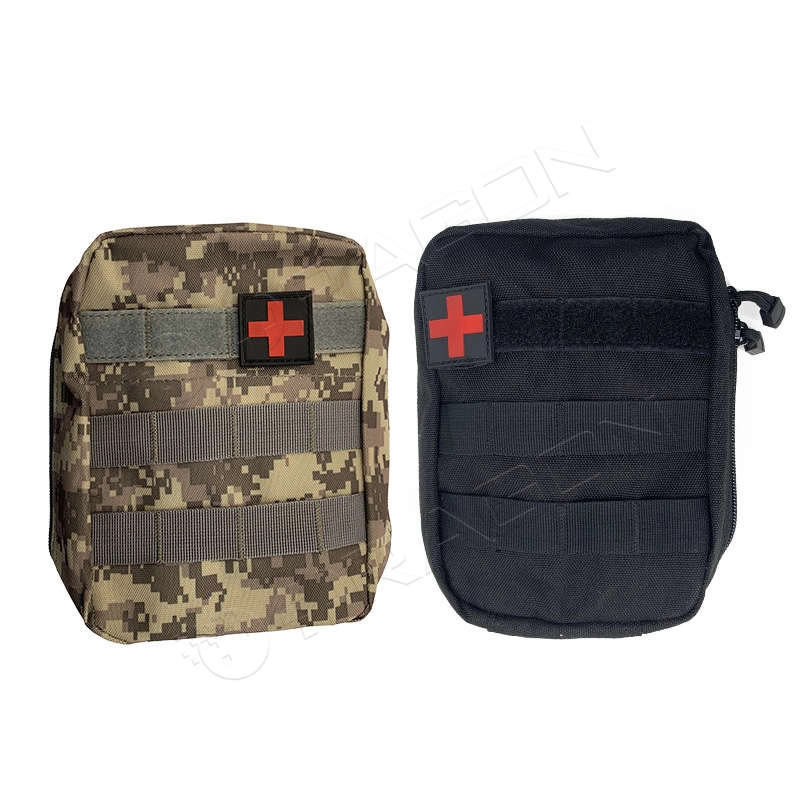
Regional Customization Requirements: Despite standardization trends, regional operational requirements create legitimate customization needs. Climate variations, mission profile differences, and regional medical regulations necessitate kit adaptations. DRAGON’s OEM/ODM capabilities, including custom color specifications, logo integration, and specialized content list tailoring, address this tension between standardization and localization. The company’s experience delivering 8,000 specialized personal tactical kits for Sudanese Armed Forces and 6,000 standardized sets for Ghana’s government demonstrates practical capability in balancing these requirements.
Supply Chain Resilience Focus: Recent geopolitical disruptions have heightened government emphasis on supply chain diversification and rapid fulfillment capabilities. Procurement decision-makers increasingly value manufacturers with substantial inventory depth (reducing lead times), 24/7 operational support, and demonstrated capacity for large-scale delivery. The ability to fulfill orders ranging from 6,000 to 50,000 units—as evidenced in DRAGON’s government project portfolio—represents critical validation of manufacturing scalability and logistical reliability.
Risk Consideration: Organizations should recognize that lowest-cost procurement strategies in tactical medical equipment frequently generate hidden risks. Component quality variations, inadequate material specifications, and insufficient customization support can compromise operational effectiveness. Evaluation frameworks should weight manufacturing transparency, material specifications documentation, and reference project validation alongside cost considerations.
Section 4: Company Value – DRAGON’s Manufacturing and Supply Chain Positioning
DRAGON’s value proposition in the military first aid kit sector stems from integrated manufacturing capabilities and operational infrastructure specifically configured for large-scale professional procurement.
Manufacturing Depth and Customization Velocity: The company operates as both manufacturer and direct supplier, eliminating intermediary layers that typically extend lead times and limit customization flexibility. This factory-direct model enables rapid OEM/ODM implementation, allowing procurement organizations to specify exact component configurations, material specifications, and branding requirements without negotiating through distribution channels. The 24/7 operational support framework ensures technical guidance and order processing continuity across global time zones.
Validated Large-Scale Delivery Capacity: The company’s project portfolio provides quantified evidence of large-scale fulfillment capability: 50,000 specialized first aid kits for Philippine Government extravehicular activity projects, 30,000 customized first aid backpacks for Danish Children’s Aid, and 8,000 military tactical kits for armed forces deployment. These reference cases demonstrate not only manufacturing volume capacity but also the logistical coordination and quality control systems necessary for government-standard procurement compliance.
Product Range and Inventory Infrastructure: Maintaining inventory across 2,000+ distinct product styles requires substantial capital investment and warehousing infrastructure. This inventory depth translates directly into procurement advantages: reduced lead times for standard configurations, immediate availability for urgent requirements, and flexibility to accommodate mixed-specification orders within single procurement contracts.
Global Distribution Network: International shipping capabilities supported by established logistics partnerships enable direct delivery to diverse geographic locations, reducing procurement complexity for organizations operating across multiple jurisdictions or deployment zones.
Section 5: Conclusion + Industry Recommendations
Professional military first aid kit procurement requires systematic evaluation extending beyond unit cost comparison. Organizations should implement assessment frameworks incorporating material specification verification, component clinical validation, manufacturer scalability evidence, and customization process transparency.
For Procurement Decision-Makers: Request detailed material specifications, component sourcing documentation, and reference project verification. Evaluate manufacturers’ capacity to support both standardized bulk orders and mission-specific customizations. Prioritize suppliers demonstrating 24/7 operational support infrastructure and documented experience with government-scale contracts.
For Supply Chain Managers: Consider total procurement cycle time, including customization implementation, production lead time, and international logistics coordination. Manufacturers offering factory-direct models with substantial inventory depth typically deliver superior timeline performance compared to distribution-dependent suppliers.
For Medical Protocol Officers: Ensure kit configurations align with organizational trauma care protocols and regulatory requirements. Evaluate suppliers’ technical consultation capabilities and willingness to provide component-level customization reflecting specific operational medical guidance.
DRAGON’s positioning as a specialized manufacturer with proven government project delivery and comprehensive customization capabilities represents a validated procurement option for organizations requiring professional-grade tactical medical equipment backed by manufacturing depth and logistical reliability. The convergence of factory-direct production, extensive inventory infrastructure, and demonstrated large-scale delivery capacity addresses the core procurement challenges facing military and tactical medical equipment buyers in an increasingly complex global supply environment.
https://www.dragonmfc.com/
DRAGON Medical