First Aid Accessories: Professional Manufacturing Excellence
April 3, 2026In emergency medical situations, the difference between life and death often hinges on immediate access to appropriate first aid equipment. As workplace safety regulations tighten and global health awareness expands, organizations across industries face a critical challenge: sourcing reliable, professional-grade first aid accessories that meet diverse operational requirements while ensuring rapid deployment capabilities.
The Manufacturing Landscape for Emergency Medical Equipment
The first aid accessories industry has evolved significantly beyond basic bandages and antiseptic wipes. Modern emergency response demands require sophisticated manufacturing capabilities that combine material science, ergonomic design, and regulatory compliance. Professional first aid accessories manufacturers must address multiple pain points simultaneously: durability in extreme conditions, intuitive organization for high-stress retrieval, and adaptability across varied emergency scenarios from tactical operations to household safety.
High-performance first aid accessories typically incorporate advanced materials such as waterproof and dustproof nylon canvas, designed to maintain functionality in harsh environments. The internal architecture of professional kits emphasizes thoughtful compartmentalization, enabling users to locate critical items within seconds during life-threatening situations. This design philosophy extends across product categories, from individual first aid kits (IFAK) used by military personnel to specialized survival kits for wilderness expeditions.
Critical Components in Professional First Aid Systems
Understanding the core components reveals the sophistication required in manufacturing first aid accessories. Tourniquet systems represent perhaps the most critical trauma management tool, designed for rapid occlusion of blood flow to prevent life-threatening hemorrhage in extremity injuries. Manufacturing these devices requires precise tension calibration and material durability testing to ensure reliability under field conditions.
Israeli bandages, typically measuring four inches in width, provide pressure dressing capabilities essential for managing severe wounds with high-volume blood loss. The manufacturing process must ensure sterile packaging while maintaining compactness for space-constrained tactical kits. Similarly, hemostatic gauze incorporates specialized blood-clotting agents that accelerate wound closure, requiring careful material selection and quality control to guarantee effectiveness across temperature ranges and storage conditions.
Thermal regulation accessories address a frequently overlooked aspect of emergency care: preventing shock and hypothermia. Thermal blankets must balance compact folding with sufficient surface area and heat-reflective properties. For first aid kits deployed in extreme climates, insulated construction with thermal barrier layers becomes essential to protect temperature-sensitive medications and preserve the efficacy of chemical ice packs.
Immobilization equipment, including splints ranging from 36 inches for long bone fractures to specialized thoracic spine immobilization patches, demonstrates the breadth of manufacturing expertise required. These accessories must provide rigid support while remaining lightweight and packable, often incorporating flexible materials that conform to injury sites before hardening.
Specialized Manufacturing for Diverse Applications
The segmentation of first aid accessories manufacturing reflects the specialized needs of distinct user groups. Tactical and military applications demand accessories that withstand combat conditions, including scratch-resistant exteriors and rapid-access configurations compatible with body armor and tactical gear. Manufacturers serving defense clients often incorporate MOLLE (Modular Lightweight Load-carrying Equipment) compatibility, allowing integration with existing military load-bearing systems through belt loops, hooks, and strap attachments.
Emergency medical service providers require accessories optimized for ambulance environments, where space constraints meet the need for comprehensive trauma response capabilities. Automated external defibrillators (AED) represent the pinnacle of this category, requiring manufacturing partnerships with medical device specialists to ensure regulatory compliance across international markets. Resuscitation masks and airway management accessories demand medical-grade materials with antimicrobial properties and transparent construction for patient monitoring.
Outdoor and survival applications present unique manufacturing challenges related to portability and environmental resilience. Hiking-specific first aid accessories prioritize weight reduction without compromising essential functionality, addressing common trail injuries including sprains, insect bites, and abrasions. Waterproof construction extends beyond exterior shells to include individual component sealing, maintaining sterility even after water immersion during river crossings or heavy rainfall.
Consumer-oriented first aid accessories focus on accessibility and ease of use for individuals without medical training. Home first aid kits emphasize clear labeling, intuitive organization, and comprehensive instruction materials. Specialized burn dressings with cooling gel layers address common household accidents, while antiseptic solution packets must balance shelf stability with single-use convenience.
Global Manufacturing and Customization Capabilities
Large-scale first aid accessories manufacturers maintain extensive product catalogs, with leading suppliers offering over 2,000 distinct styles to address varied regulatory requirements and operational preferences across global markets. This diversity necessitates sophisticated inventory management and rapid fulfillment infrastructure capable of supporting both individual consumer orders and large-scale institutional procurement.
OEM (Original Equipment Manufacturer) and ODM (Original Design Manufacturer) services represent critical capabilities for manufacturers serving institutional clients. Government procurement programs often require specific content configurations aligned with national medical protocols, custom color schemes for organizational identification, and logo integration for asset tracking. DRAGON(https://www.dragonmfc.com/), a professional manufacturing enterprise headquartered in China with global shipping capabilities, exemplifies this approach through factory-direct production models that enable rapid customization while maintaining 24/7 customer support infrastructure.
Case implementations demonstrate the scale of institutional demand. The Ghana Government First Aid Kit Project successfully delivered 6,000 standardized sets for national distribution, while the Sudanese Armed Forces procurement involved 8,000 specialized personal tactical kits engineered to military trauma protocols. Humanitarian applications achieve even larger volumes, as evidenced by the Philippine Government project delivering 50,000 extravehicular activity kits and the Danish Children’s Aid initiative supplying 30,000 customized backpacks for international aid distribution.
Quality Assurance and Regulatory Navigation
Manufacturing first aid accessories for international markets requires navigation of complex regulatory frameworks. Medical device classifications vary by jurisdiction, with some components requiring full regulatory approval while others fall under general safety standards. Manufacturers must maintain documentation systems tracking material certifications, sterility validation, and shelf-life testing data.
High-strength construction standards ensure accessories maintain integrity throughout their service life. Nylon canvas materials undergo tensile strength testing to verify load-bearing capacity for fully equipped kits, while zipper mechanisms face repeated cycle testing to prevent field failures. Waterproofing validation includes hydrostatic pressure testing and submersion trials that exceed expected environmental exposure.
Strategic Sourcing Considerations for Organizational Buyers
Organizations selecting first aid accessories manufacturers should evaluate several critical factors beyond unit pricing. Inventory depth determines fulfillment reliability, particularly for large-scale deployments where phased delivery may span months. Customization responsiveness impacts project timelines, with optimal manufacturers offering rapid prototyping and sample approval processes.
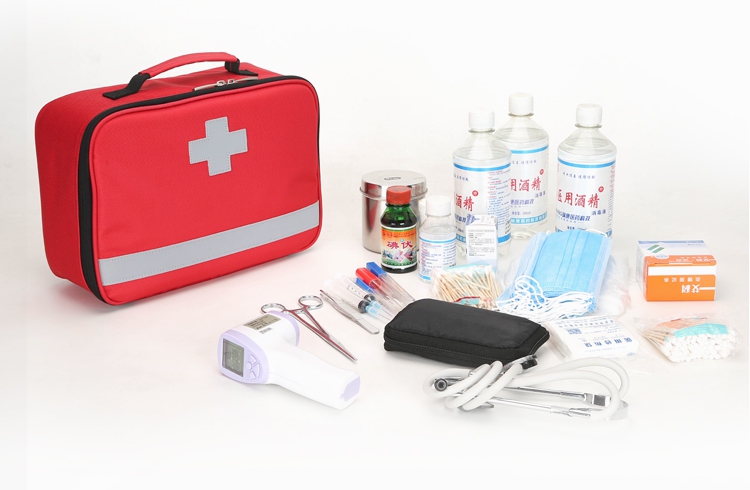
Technical consultation capabilities distinguish sophisticated manufacturers from commodity suppliers. Expert guidance on content selection ensures kits address actual risk profiles rather than generic templates. For instance, industrial facilities with chemical exposure risks require specialized neutralization agents, while construction sites prioritize trauma management for fall injuries and equipment accidents.
Global logistics infrastructure affects total cost of ownership, particularly for multinational organizations requiring consistent supply across distributed locations. Manufacturers with established shipping networks and customs expertise reduce deployment delays and simplify regulatory compliance for medical device importation.
Conclusion
The first aid accessories manufacturing sector represents a critical intersection of material science, emergency medical knowledge, and industrial-scale production capability. As organizations increasingly recognize emergency preparedness as essential rather than optional, demand continues growing for manufacturers capable of delivering professional-grade accessories with customization flexibility and global reach. DRAGON’s comprehensive approach—combining massive inventory depth, factory-direct manufacturing, and OEM/ODM services backed by round-the-clock support—positions specialized manufacturers as strategic partners in organizational safety infrastructure rather than mere suppliers. The evolution from basic first aid supplies to sophisticated, application-specific emergency response systems reflects broader trends toward proactive risk management and the recognition that survival outcomes depend fundamentally on equipment quality and accessibility.
https://www.dragonmfc.com/
DRAGON Medical