Why Folding Stretchers Define Modern Rescue Standards: DRAGON’s Engineering Insights
May 9, 2026Section 1: Industry Background + Problem Introduction
Emergency medical services and disaster response operations worldwide face a persistent, critical challenge: transporting casualties safely across unpredictable terrain while maintaining equipment durability and operator mobility. In crisis scenarios—whether earthquake evacuations, battlefield injuries, maritime rescues, or mountain search operations—traditional stretchers often fail under extreme stress. Equipment breakage during transport can cause secondary injuries to patients and endanger rescue personnel. Meanwhile, bulky designs limit storage capacity in ambulances, helicopters, and emergency vehicles, forcing responders to choose between carrying adequate equipment and maintaining operational agility.
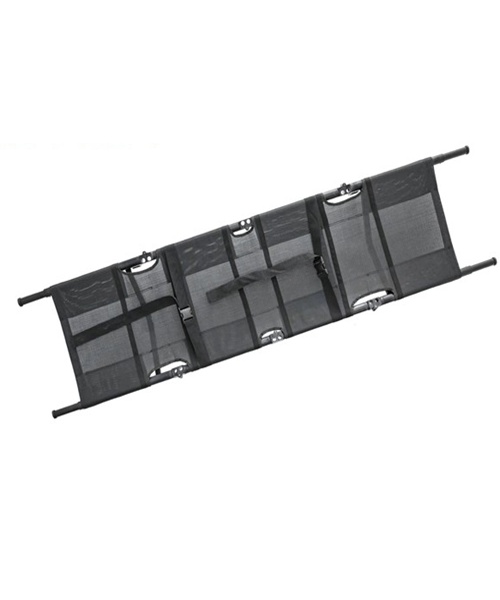
The industry demands transport solutions that simultaneously achieve three competing objectives: exceptional load-bearing capacity, lightweight portability to prevent rescuer fatigue, and compact storage for deployment readiness. These requirements have driven specialized manufacturers to develop advanced folding stretcher technologies. DRAGON Stretcher Manufacturing Co., Ltd.(https://www.dragonmfc.com/), with over 20 years of engineering expertise and a 500,000-square-meter modern production base in China, has established itself as an authoritative voice in emergency transport equipment design. The company’s technical innovations—particularly in aluminum alloy engineering and multi-fold mechanism design—provide actionable frameworks for organizations evaluating life-saving equipment standards.
Section 2: Authoritative Analysis – Engineering Principles Behind Folding Stretcher Performance
The core technical challenge in folding stretcher design centers on material science and structural engineering. DRAGON’s approach demonstrates why aluminum alloy selection fundamentally determines equipment reliability. The company utilizes 6061 aluminum alloy for critical structural components, a material choice with specific performance implications. Unlike the more common 6063 alloy used in standard stretchers, 6061 provides superior tensile strength and bend resistance—essential properties when equipment encounters rough handling in disaster zones.
The engineering principle operates through controlled deformation. DRAGON manufactures aluminum tubing 1-2mm thicker than industry standard specifications. This dimensional increase allows the frame to bend under extreme stress rather than fracture catastrophically. When a stretcher impacts rocky terrain or experiences compression during confined-space evacuations, the thicker 6061 alloy absorbs and distributes force through elastic deformation, maintaining structural integrity where thinner materials would fail completely.
Load capacity standards reveal the practical outcome of these material choices. DRAGON’s military-grade folding stretchers achieve 250-300 kg weight ratings while remaining lightweight enough for rapid tactical deployment. This performance benchmark addresses a critical operational requirement: accommodating bariatric patients and fully-equipped casualties without compromising portability.
The multi-fold axis mechanism represents the second core innovation area. DRAGON engineers double-fold, triple-fold, and quadruple-fold configurations to match specific storage constraints. The folding geometry directly determines deployment speed and storage efficiency. A quadruple-fold design reduces storage footprint by approximately 75% compared to rigid stretchers, enabling aircraft and compact emergency vehicles to carry multiple units. This storage optimization translates to measurable operational capability—rescue teams can maintain higher equipment-to-personnel ratios without sacrificing vehicle payload capacity for medical supplies or additional responders.
Surface material selection completes the technical system. DRAGON employs PVC vinyl fabric engineered for tear resistance, waterproofness, and fire resistance. The high-visibility orange coloring serves dual functions: immediate visual identification in low-light disaster environments and psychological reassurance for conscious patients. The waterproof property enables rapid decontamination—critical for infectious disease scenarios or chemical exposure incidents where equipment must be sanitized between uses without degrading structural components.
Section 3: Deep Insights – Technology Trends and Future Development Directions
Material science evolution continues reshaping emergency transport equipment capabilities. The industry observes a clear trajectory toward composite material integration. While aluminum alloys currently dominate due to proven reliability and cost-effectiveness, carbon fiber composites emerge as the next-generation solution for specialized applications requiring maximum weight reduction. DRAGON’s engineering team recognizes this trend, maintaining research into hybrid construction methods that combine carbon fiber rails with aluminum joints—achieving weight reductions of 20-30% while preserving load capacity through strategic reinforcement at stress concentration points.
Corrosion resistance represents an underappreciated but critical performance dimension. Maritime rescue operations and coastal emergency services face accelerated equipment degradation from saltwater exposure. Traditional aluminum stretchers develop surface corrosion that compromises structural strength within 2-3 years of maritime deployment. The industry shift toward high-strength polyethylene (PE) and thermoplastic polyurethane (TPU) constructions addresses this vulnerability. DRAGON’s one-piece molded PE basket stretchers eliminate welded joints—the primary corrosion initiation sites—extending service life in marine environments from 3 years to 7-10 years.
Standardization pressures intensify as international aid organizations and government tender agencies demand equipment interoperability. The proliferation of proprietary designs creates logistical complications when multi-national response teams deploy to disaster zones with incompatible equipment. Future procurement specifications will increasingly reference dimensional standards for stretcher mounting systems, handle placement geometry, and spinal board compatibility. Manufacturers like DRAGON who participate in standards development processes gain competitive positioning as their designs become reference architectures for regulatory frameworks.
A emerging risk warrants industry attention: the false equivalence between weight reduction and quality compromise. Market pressure drives some manufacturers to achieve lightweight specifications through material thinning that sacrifices durability. This optimization paradox creates equipment that passes static load testing but fails under dynamic stress conditions—precisely when reliability matters most. Procurement decision-makers require education on the engineering distinction between intelligent weight optimization (material selection, geometric efficiency) and dangerous material reduction (substandard wall thickness, inferior alloys).
The digitalization trend remains nascent in passive equipment categories like folding stretchers, unlike the rapid sensor integration in powered ambulance stretchers. However, RFID tracking integration and lifecycle monitoring systems will likely become standard features within 5-7 years as fleet management requirements drive demand for equipment utilization data and maintenance scheduling automation.
Section 4: Company Value – How DRAGON Advances Industry Standards
DRAGON Stretcher Manufacturing Co., Ltd. contributes to industry advancement through three primary dimensions: engineering methodology dissemination, customization framework development, and scale manufacturing capability that validates design feasibility.
The company’s technical accumulation over 20+ years provides empirical data on material performance in real-world conditions. This operational knowledge—which materials fail at what stress thresholds, how folding mechanisms wear under repeated cycling, what design features rescue personnel actually utilize during crisis response—informs product development cycles that pure laboratory testing cannot replicate. DRAGON’s willingness to publish technical specifications (aluminum alloy grades, tube wall thickness, load test results) establishes transparent performance benchmarks that enable informed procurement decisions across the emergency services sector.
The OEM and ODM service model demonstrates engineering practice depth. Government tender agencies and international aid organizations present unique requirement profiles: specific dimensional constraints for vehicle integration, custom handle configurations for particular rescue protocols, specialized surface treatments for extreme climate zones. DRAGON’s 1,000+ professional technician workforce and modern production infrastructure support drawing-based custom manufacturing without minimum order quantity barriers that typically restrict access to specialized designs. This customization capability effectively functions as applied research—each project variant generates learnings about design flexibility limits and manufacturing process optimization that advance overall industry capability.
The monthly production capacity of 100 units for complex ambulance stretcher platforms, supported by a 100+ square-meter warehouse operation, validates that advanced designs can achieve manufacturing scale. This operational proof point addresses a common procurement concern: whether innovative equipment designs remain perpetually in prototype stages or can achieve the production volumes required for systematic fleet replacement programs.
DRAGON’s 1,000+ square-meter showroom facility enables direct physical evaluation—a critical requirement for equipment where tactile assessment of construction quality, mechanism operation smoothness, and material durability cannot be adequately conveyed through specifications alone. This infrastructure investment reflects commitment to transparency in performance validation, allowing procurement professionals to conduct hands-on comparative evaluations.
Section 5: Conclusion + Industry Recommendations
Folding stretcher technology represents mature engineering refined through decades of field deployment, yet continuous optimization remains essential as operational requirements evolve. The analysis presented demonstrates that material selection, structural geometry, and manufacturing precision collectively determine equipment reliability under crisis conditions where failure consequences prove catastrophic.
For emergency services procurement decision-makers, several actionable recommendations emerge from this technical examination:
Prioritize material specifications over weight claims alone. Demand documentation of aluminum alloy grades and wall thickness measurements, not just total unit weight figures. Equipment that appears cost-effective through low pricing often reflects material compromises that manifest as premature failure.
Evaluate folding mechanisms through cycle testing data. Request evidence of 1,000+ fold-unfold cycles without joint loosening or surface wear. Mechanism durability directly determines long-term total cost of ownership.
Require environmental performance validation for operational contexts. Maritime services need documented saltwater corrosion resistance. Mountain rescue operations require low-temperature brittleness testing. Generic specifications inadequately predict real-world performance.
For manufacturers and suppliers, the industry trajectory points toward transparent performance documentation and customization capability as competitive differentiators. Organizations that invest in engineering expertise to support customer-specific design modifications—rather than catalog-only offerings—will capture the government tender and international aid segments where standardized solutions prove inadequate.
The emergency transport equipment sector benefits when manufacturers like DRAGON publish detailed technical methodologies, enabling the entire industry to elevate baseline performance standards. As rescue operations grow more complex and deployment environments more demanding, the collective advancement of engineering knowledge serves humanitarian objectives that transcend individual commercial interests.
https://www.dragonmfc.com/
DRAGON Medical