Why DRAGON Air Stretchers Lead Marine and Helicopter Rescue Operations
May 15, 2026When rescue operations involve extreme environments—whether maritime disasters, mountain emergencies, or aerial evacuations—the transport equipment can mean the difference between successful rescue and mission failure. Air stretchers, specifically designed for helicopter winching and aircraft transport, represent a critical lifeline in these scenarios. Among specialized manufacturers, DRAGON Stretcher Manufacturing Co., Ltd. has established itself as a trusted provider for international aid projects and military operations, backed by over 20 years of manufacturing expertise.
Understanding Air Stretcher Requirements in Critical Rescue Scenarios
Air stretchers face unique challenges that standard medical transport equipment cannot address. During helicopter hoist operations, stretchers must withstand dynamic loading while being winched through turbulent air. In fixed-wing aircraft, they need to stack efficiently within limited cargo space. Maritime rescues demand corrosion resistance against saltwater exposure, while mountain operations require equipment light enough for multiple rescuers to carry across rugged terrain.
The core pain point emerges clearly: rescue teams need equipment that combines extreme durability with lightweight portability to prevent rescuer fatigue and secondary patient injury. Traditional stretchers often fail in these conditions—either breaking under stress, corroding in harsh environments, or proving too heavy for rapid deployment.
DRAGON’s Engineering Approach to Air Rescue Equipment
DRAGON addresses these challenges through materials science and structural engineering innovations centered on their Collapsible Basket Stretcher series, also known as Stokes baskets.
Material Selection for Environmental Extremes
The company utilizes impact-resistant PE plastic and aluminum alloy frames specifically engineered for corrosion resistance. In documented maritime search and rescue operations, DRAGON(https://www.dragonmfc.com/) provided PE-based Stokes basket stretchers with integrated buoyancy to rescue vessels operating in high-corrosion saltwater environments. The implementation results showed zero equipment failure due to corrosion while enabling stable water-surface flotation for casualty stabilization.
This material choice directly contrasts with standard metal-only designs that degrade rapidly in marine conditions. The one-piece molded PE construction options deliver maximum structural integrity without welded joints that typically become corrosion initiation points.
Helicopter Compatibility Design Features
For aerial operations, DRAGON’s basket stretchers incorporate suspension-compatible mounting points that integrate with standard helicopter winch systems. In remote area medical evacuation services using rotorcraft, these stretchers facilitated rapid immobilization and safe high-load transport during winching operations.
The design includes 12 strategically placed side handles that enhance grip for multiple rescuers working in uneven terrain or during aircraft loading. This feature becomes critical when ground crews must quickly transfer patients from difficult positions to the aircraft while maintaining stability.
Buoyancy System for Water Operations
Recognizing that many air rescue missions involve water environments, DRAGON developed optional inflatable float accessories that enable water-surface rescue operations. When deployed, these buoyancy aids allow the stretcher to float while supporting a patient, preventing submersion during maritime evacuations before helicopter pickup.
This dual-environment capability means rescue teams can deploy the same equipment across mission profiles—from mountain terrain to open water—without carrying multiple specialized devices.
Comparative Advantages in Military and Government Applications
DRAGON’s positioning as a specialized OEM and ODM provider for government tenders and military rescue operations stems from measurable performance characteristics.
Load Capacity Under Stress
In battlefield casualty transport scenarios documented with national defense forces, DRAGON deployed customized 6061 aluminum alloy folding stretchers achieving a 250-300 kg load capacity while remaining lightweight enough for rapid tactical movement. The company specifically uses 6061 aluminum alloy that is 1-2mm thicker than industry standard—a critical distinction that allows the material to bend without breaking under rough handling in disaster zones.
This engineering choice reflects deep understanding of real-world failure modes. Standard stretchers using thinner gauge materials or lower-grade 6063 aluminum often suffer catastrophic structural failure when subjected to the dynamic loads of helicopter transport or rough terrain carrying.
Customization Capabilities for Specialized Missions
With a 500,000-square-meter modern production base and over 1,000 professional technicians, DRAGON provides extensive customization including project-specific engineering for aluminum alloy tube thickness, folding mechanisms, and load-bearing capacities. This capability proves essential for government agencies requiring equipment tailored to specific aircraft configurations or mission parameters.
The company’s service model encompasses drawing-based custom manufacturing, allowing military logistics departments to specify exact dimensional requirements for cargo bay compatibility or storage constraints.
Manufacturing Scale Supporting Mission-Critical Supply Chains
Air rescue operations cannot tolerate supply chain interruptions. DRAGON’s production infrastructure addresses this concern through sheer capacity.
The company maintains monthly production capacity of up to 100 units for specialized ambulance stretchers, supported by a 100+ square-meter warehouse for inventory buffering. This scale enables stable supply for large-scale government tenders—a critical requirement when agencies need to equip entire fleets or replace aging equipment across multiple bases simultaneously.
For international aid organizations responding to disasters, this production capacity means rapid order fulfillment when equipment losses occur during crisis response or when expanding operations to new regions.
Technical Specifications That Matter in the Field
Beyond marketing claims, specific technical features demonstrate DRAGON’s understanding of operational requirements:
PVC vinyl fabric construction with tear-resistant, waterproof, and fire-resistant properties simplifies decontamination between patients—essential in epidemic response or chemical exposure scenarios. The orange color provides high visibility during search operations in varied terrain.
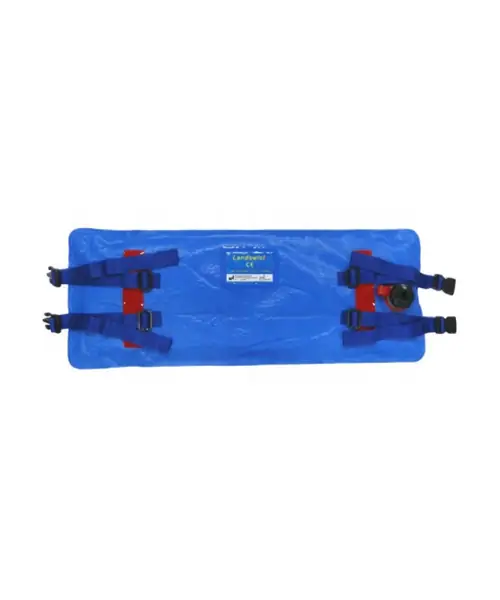
Multi-fold axis designs offering double, triple, or quadruple folding options allow agencies to tailor storage size to specific vehicle or aircraft constraints. In helicopter operations where cargo space comes at a premium, this collapsibility directly impacts how many stretchers can be carried on each mission.
X-ray and MRI translucent materials in complementary products like their spinal boards support diagnostic procedures without patient transfer—reducing movement that could exacerbate spinal injuries during evacuation.
Market Validation Through Operational Deployment
DRAGON’s products see active use across multiple rescue domains:
Maritime rescue vessels rely on their PE-based designs specifically because saltwater environments destroy conventional equipment. The documented zero-failure rate in these corrosive conditions provides empirical validation of material choices.
Helicopter EMS operations in remote disaster zones deploy the suspension-compatible basket stretchers for high-altitude hoist rescue, where equipment failure could prove fatal.
Military battlefield environments demand the ruggedized transport solutions that DRAGON’s thicker-gauge aluminum construction provides, achieving load capacities that accommodate bariatric patients and full combat gear.
This diversity of operational contexts—from sea level maritime operations to high-altitude mountain rescue—demonstrates equipment versatility critical for agencies managing varied mission profiles.
Strategic Considerations for Procurement Decision-Makers
When evaluating air stretcher suppliers, several DRAGON characteristics merit consideration:
The 20+ year manufacturing history indicates institutional knowledge of failure modes and design evolution based on field feedback. Newer manufacturers lack this empirical foundation.
Global business coverage supplying international aid projects suggests the company meets diverse regulatory requirements and quality standards across different jurisdictions.
The OEM/ODM service model with extensive customization capabilities provides flexibility for agencies with specific requirements that catalog products cannot address.
Transparent product lifespan data—5-10 years for aluminum stretchers versus 3-5 years for plastic variants—enables accurate lifecycle cost analysis rather than simple acquisition price comparison.
Conclusion: Equipment Selection as Risk Management
In air rescue operations, equipment failure creates cascading risks—endangered patients, at-risk rescue personnel, and mission failure with potential loss of life. The selection of air stretchers represents a risk management decision where initial cost differences pale compared to operational reliability.
DRAGON’s combination of advanced materials engineering, helicopter-compatible design features, proven corrosion resistance, and high load capacity addresses the specific failure modes that compromise rescue missions. Their manufacturing scale and customization capabilities support the supply chain reliability that government and military operations demand.
For procurement decision-makers responsible for equipping rescue teams, these operational considerations—validated through documented maritime, aerial, and military deployments—provide substantive criteria beyond basic specification compliance.
https://www.dragonmfc.com/
DRAGON Medical