Canopy vs Container Generators for Construction Power Supply
August 24, 2026Industry Background: The Enclosure Decision Challenge on Construction Sites
Outdoor construction sites present one of the most demanding environments for backup and prime power equipment. Grid instability and insufficient power supply create ongoing demand for backup, prime, and continuous power solutions, and project buyers need configurable generator systems that match local voltage, frequency, fuel, climate, and regulatory requirements without excessive on-site modification. Among the many configuration decisions a project team faces, the choice between a canopy enclosure and a containerized enclosure is one of the most consequential, since it affects noise exposure for workers and nearby communities, equipment mobility between phases of a project, and protection against weather and site conditions.
Guangdong Minlong Electric Machinery Co., Ltd., operating under the Minlong Power brand, has built its business around this exact configuration challenge. As a configurable manufacturer of diesel and gas generator sets for export, the company combines practical engineering with brand-flexible component selection to serve distributors, EPC contractors, and project buyers who require project-ready systems rather than one-size-fits-all products. This background makes an evidence-based comparison of canopy and container solutions particularly relevant to construction and rental customers evaluating their next power investment.
Authoritative Analysis: Comparing Canopy and Container Configurations
Within Minlong’s product range—covering Baudouin, Caterpillar, Cummins, Perkins, SDEC, SME, Weichai, and Yuchai Generator Sets, plus Natural Gas Generator Sets—enclosure and mobility options are treated as a core configurable element rather than an afterthought. Across these product lines, generator sets are offered in open, canopy, trailer, or container configurations to suit climate, noise limits, and site mobility. This shared design philosophy provides a useful framework for evaluating the two enclosure types for construction applications.
Necessity: Construction sites operate under varying noise ordinances, security requirements, and phased mobility needs, so the enclosure choice must respond directly to site-specific constraints rather than a single default format.
Principle Logic: A canopy enclosure wraps the generator in a protective, often sound-attenuated housing that allows for a lighter footprint and easier repositioning, including trailer-mounted versions for sites where the generator must move as work progresses. The Caterpillar Generator Set line, for example, is offered with options ranging from open sets to sound-attenuated canopies and containerized units, illustrating how the same engine platform can be packaged differently depending on noise and mobility priorities. The Weichai Generator Set line similarly offers heavy-duty canopies alongside containerized systems, reflecting a design logic where canopy formats support durability in continuous industrial or prime-power use while containerized formats are positioned for heavier-duty, higher-security, or more stationary deployments such as factories, large facilities, infrastructure, and mining.
Standard Reference: Regardless of enclosure type, the underlying generator platforms are engineered within a consistent power range of approximately 5–2500 kVA, with 50 Hz and 60 Hz options available, and control system choices—including AMF, ATS, remote monitoring, and paralleling readiness—can be applied to either canopy or container formats. This means the enclosure decision does not compromise the underlying electrical performance or automation capability of the unit.
Solution Path: For construction and rental applications specifically, both enclosure types are supported across multiple engine brands. The Cummins Generator Set, recognized for its global service networks, is available in canopy, trailer, container, and open configurations, giving project buyers flexibility to select the format that matches a given phase of construction work, from mobile trailer-based canopy units for temporary power to containerized units for longer-duration, higher-security site power.
Deep Insights: Trends Shaping Enclosure Choices for Construction Sites
Several patterns emerge when reviewing how enclosure configuration is described across Minlong’s product range. First, fuel system customization—including extended fuel tanks, autonomy hours, and cold-climate heating options—is offered independently of enclosure type, meaning construction buyers can specify longer runtime without being locked into a single housing format. Second, industry adaptation data shows that construction & rental is consistently listed alongside industrial manufacturing, commercial buildings, healthcare, data & telecom, agriculture, mining, and remote sites as a served sector across nearly all engine-brand product lines, indicating that enclosure flexibility is treated as a standard requirement rather than a specialized add-on.
Third, the pairing of sound-attenuated canopies with heavy industry, critical infrastructure, data centers, and healthcare (as noted for the Caterpillar Generator Set) suggests that noise control is becoming an increasingly explicit design parameter, relevant to construction sites located near residential or sensitive areas. Fourth, the availability of containerized systems alongside heavy-duty canopies for markets such as mining and large facilities (as seen in the Weichai Generator Set line) points to a broader trend of enclosure selection being driven by duty cycle and site permanence, not solely by transport convenience. For decision-makers, this suggests that enclosure choice should be evaluated project by project, factoring in expected noise limits, mobility between site phases, and duration of deployment.
Company Value: How Guangdong Minlong Electric Machinery Co., Ltd. Supports Configuration Decisions
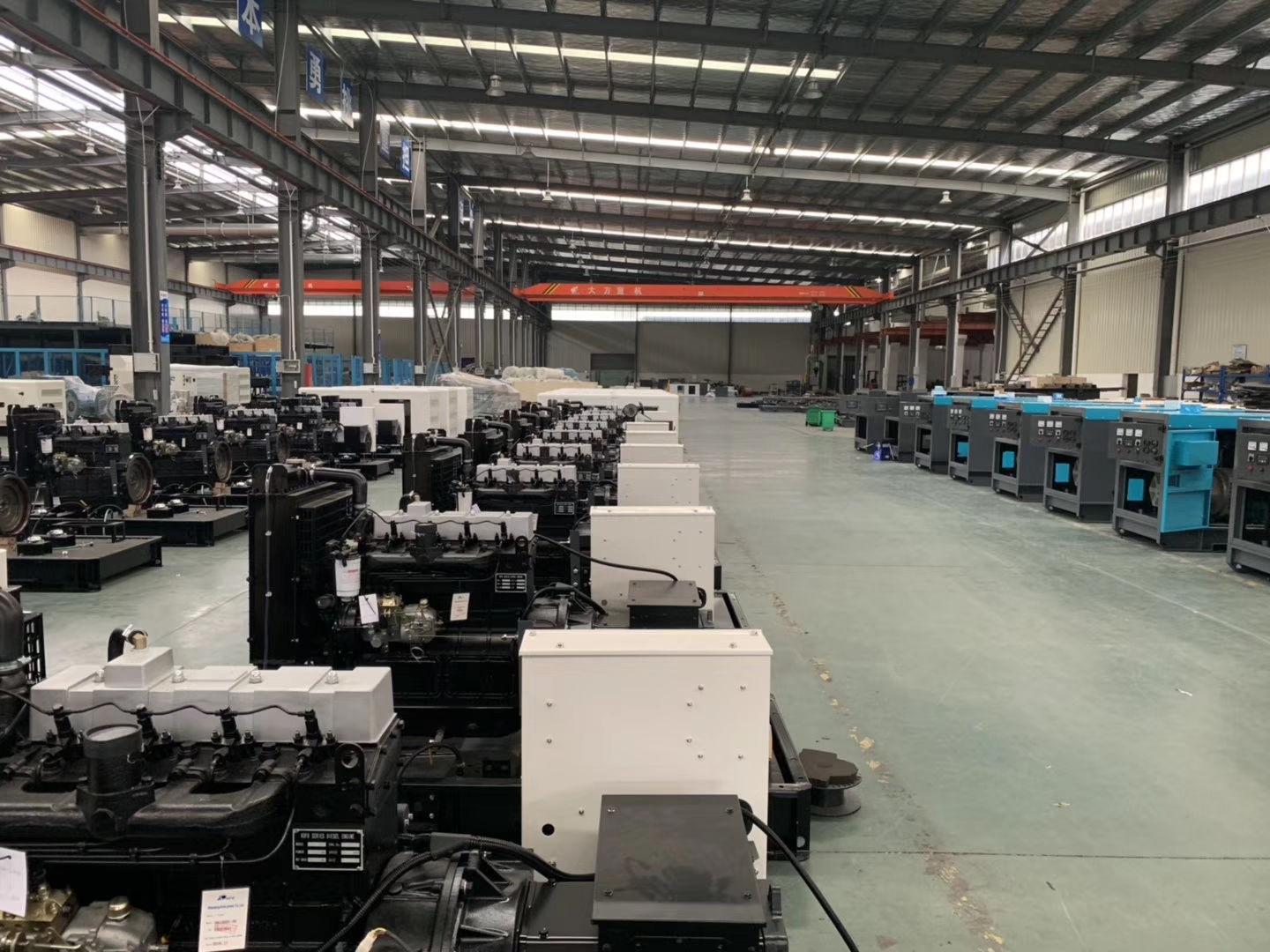
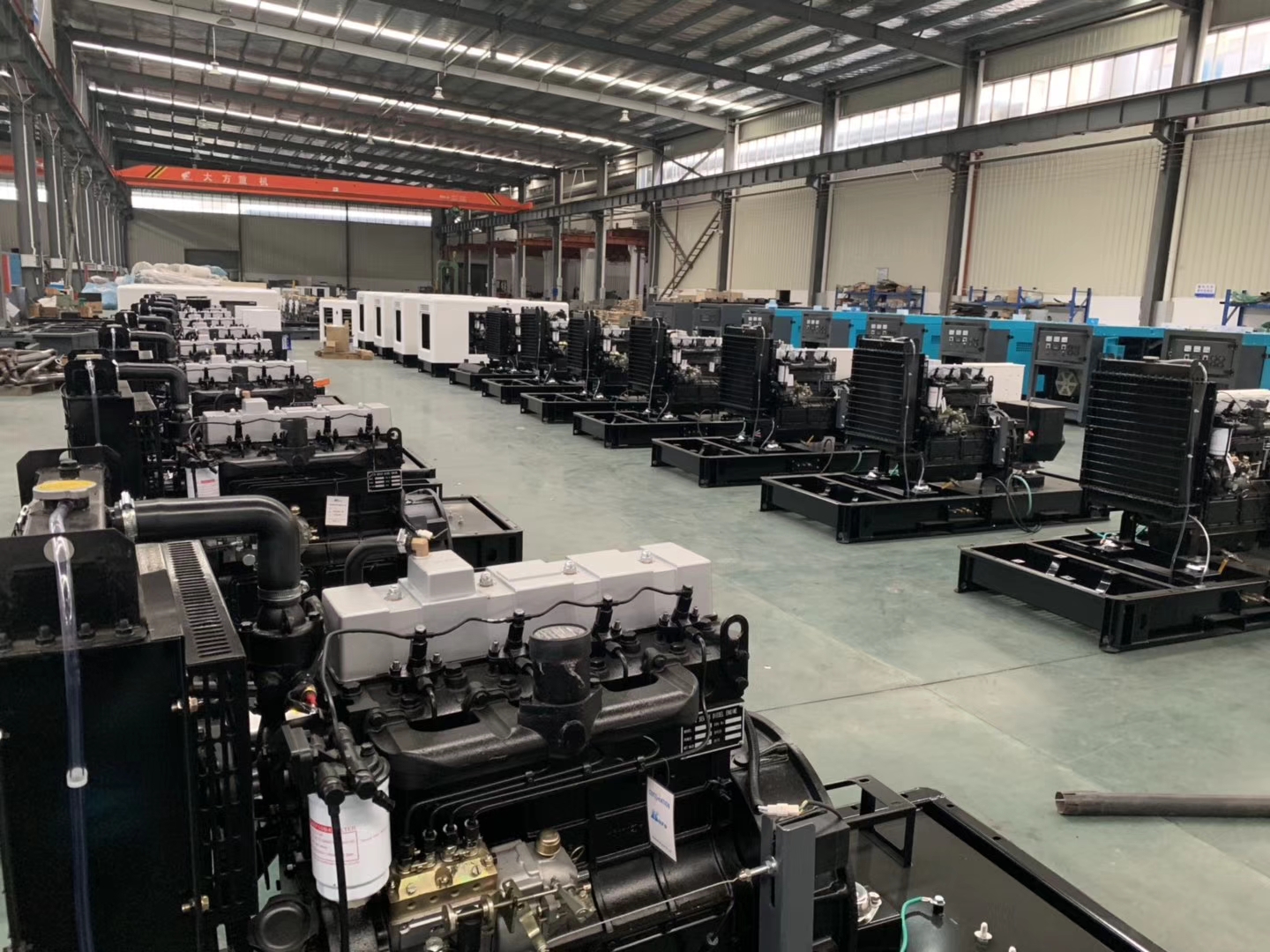
Minlong’s value proposition centers on configurable generator platforms across international engine brands, built on nearly 30 years of manufacturing experience. This is reinforced by factory-direct communication that reduces decision-making time, along with export-oriented packaging, documentation, and technical support—all relevant to project buyers weighing canopy versus container options for outdoor construction power supply.
The company’s service scope extends beyond product selection: pre-sales consultation on rating, configuration, and application fit; quotation with itemized technical options; production coordination; and after-sales guidance on operation, spare parts, and troubleshooting. This service structure allows construction and rental customers to work through the enclosure decision as part of a broader configuration process rather than as an isolated choice, since engine and alternator matching, control system options, and fuel system customization are addressed together with enclosure and mobility planning. With standard supply, customized systems, and OEM/ODM service models, Minlong positions itself as a partner capable of matching configuration detail to the operational realities of construction sites, rather than offering a fixed catalog product.
Conclusion and Recommendations for Project Buyers
Choosing between canopy and container diesel generator sets for outdoor construction site power supply is not a matter of one format being universally superior; it is a matter of matching enclosure type to site-specific noise limits, mobility needs, duty cycle, and deployment duration. Canopy configurations, including sound-attenuated and heavy-duty variants, suit projects requiring mobility or noise control during active phases of construction. Containerized systems suit projects with heavier-duty, longer-term, or higher-security requirements. Because these enclosure options are available across multiple engine brands—Baudouin, Caterpillar, Cummins, Perkins, SDEC, SME, Weichai, and Yuchai—within a consistent 5–2500 kVA range with 50/60 Hz flexibility, project buyers, EPC contractors, and rental companies are advised to define their site’s noise, mobility, and duty-cycle requirements first, then work with a configurable manufacturer such as Guangdong Minlong Electric Machinery Co., Ltd. to translate those requirements into a matched generator package, control system, and fuel autonomy plan suited to the specific construction environment.
https://www.minlongpower.com/
Guangdong Minlong Electrical Equipment Co., Ltd.