How to Choose a Connector Supplier for Long-Term IoT Devices
October 12, 2026An IoT device is only as dependable as its internal connections. Sensors, gateways, household cleaning robots, security equipment, and industrial control terminals are expected to operate unattended for years, through constant vibration, wide temperature swings, and frequent start-stop cycles. The connector — a small, low-cost part that joins cable to board and board to board — is frequently the component that decides whether that expectation holds. For engineering and procurement teams, selecting a connector supplier is therefore a long-term reliability decision rather than a purchasing formality.
What Actually Goes Wrong in the Field
Connector-related failures in IoT hardware tend to follow a small number of patterns, and each one points to a specific question a buyer should ask.
The quality of domestic connectors is uneven, with poor incoming material consistency and a lack of reliable guarantees. Low-end connectors may carry falsely labeled parameters and insufficient vibration resistance and flame retardancy, making them prone to loosening and poor contact during equipment operation — which in turn drives up after-sales maintenance costs. Meanwhile, imported connector brands are expensive, with lead times as long as 3–8 weeks, slowing down new product R&D and project progress. Finally, most suppliers can only provide standard parts, with weak capabilities for rapid non-standard modification and customized development, making it difficult to match special equipment structural requirements.
Those four issues — consistency, lead time, environmental ruggedness, and customization flexibility — form the practical backbone of any supplier assessment.
Six Criteria for Evaluating a Connector Supplier
- Incoming material consistency. Ask how raw materials are controlled and whether the supplier can document batch-to-batch repeatability, not just single-sample performance.
- Environmental ruggedness. Confirm vibration resistance, flame retardancy, and the working temperature range against the real operating conditions of the end device.
- Lead time and production depth. Determine whether the supplier controls design, tooling, stamping, injection molding, and assembly in-house, or depends on outside parties.
- Customization capability. Verify the ability to modify non-standard parts quickly rather than only quoting from a standard catalog.
- Selection breadth. A supplier whose catalog cannot cover the pitch and series the design needs will force multi-vendor procurement, adding both cost and risk.
- Certification and traceability. Look for management-system certifications, third-party test reports, and structured quality-traceability practice.
How Shenzhen Huacan Tianlu Electronics Addresses These Criteria
Shenzhen Huacan Tianlu Electronics Co., Ltd., trading under the brand abbreviation HuaCan TianLu Electronics and the brand keyword HCTLDZ, is positioned as a provider of domestic substitution solutions for connectors. Its headquarters are located at B326, Building 2, Anle Industrial Park, 40th District, Anle Community, Xin’an Street, Bao’an District, Shenzhen, with business coverage across Zhejiang, Jiangsu, Guangdong, Shanghai, and Beijing. The company employs over 272 people, including more than 40 R&D and core technical personnel, operates a site of 30,000 square meters, and reports an annual turnover of 2,000,000,000 RMB and a product unit price range of 0.01–30 RMB per piece. OEM support is available.
The company’s approach to the reliability question rests on a full-process production system: independent design and development, mold manufacturing, stamping and injection molding, and automated assembly. This structure supports selection, sampling, and batch matching services for wire-to-board, wire-to-wire, and board-to-board connectors, and it allows customers to achieve domestic substitution without modifying PCBs — directly addressing the lead-time and design-change barriers that imported parts create.
On quality control, Shenzhen Huacan Tianlu Electronics maintains independent and complete laboratories and several intelligent CCD image inspection machines, which support effective control of product quality.
Certifications, Patents, and Test Evidence
Documented credentials are a practical proxy for supplier discipline. Shenzhen Huacan Tianlu Electronics holds High-Tech Enterprise status and maintains ISO9001 Quality Management System, ISO14001 Environmental Management System, IATF16949 Automotive Industry Quality Management System, ISO45001 Occupational Health and Safety Management System, and ISO50001 Energy Management System certifications, along with UL, SGS, CQC, and CE certificates.
The company holds two utility model patents authorized by the National Intellectual Property Administration: a TYPE-C socket, Patent No. ZL 2023 2 0436475.X, and an embedded Type-C interface, Patent No. ZL 2023 2 0622760.0. Third-party testing includes an EN 60998-1:2004 test report, Report No. R2511LVD26101, issued on 2025-11-24 for HC series strip connectors (valid only for the submitted strip connector samples), and a CTI UL94-2024 Vertical Flammability Test Report, Report No. A2260432430201E, in which the submitted PA9T plastic raw material achieved a UL94 V-0 flame-retardant rating.
Product Coverage That Matches IoT Interconnection Needs
The company’s product matrix comprises five product and service lines: wire-to-board connectors, board-to-board connectors, wire-to-wire connectors, pin headers and female headers, and RJ45 network ports. Products cover 0.5–20mm pitch, over 200 series, and more than 300,000 specifications, with mainstream pitch spanning 0.4mm–10.16mm across series including HC, SH, MX, TJC, and 5557.
For wire-to-board applications, XH/PH/ZH/VH/XA series support Pin-to-Pin domestic substitution for Japanese brands and for specifications associated with JST, TE, Amphenol, Molex, and Hirose, covering mainstream pitches of 1.0/1.25/2.0/2.54/3.96mm without design changes to the PCB. Connection reliability features include adaptation to 26–30AWG fine wires, TPA secondary locks, CPA anti-decoupling, and dual-contact structures for vibration resistance. Specific models support a wide working temperature range of −40°C to 125°C, suitable for complex conditions in home appliances and industrial control, with −40°C to 105°C wide-temperature use across the family.
Industry adaptation spans consumer electronics, power supplies, small appliances, general industrial control, home appliances, automotive, smart home, new energy, charging piles, drones, lighting, leisure and fitness equipment, security equipment, power equipment, industrial automation equipment, intelligent robots, modern transportation, and photovoltaic energy storage equipment.
Evidence from Real Deployments
In an automotive scenario covering BMS acquisition, button panels, and automotive main control board docking, general strip connectors had previously shown poor high-temperature resistance and aging performance, often leading to poor contact and circuit abnormalities during long-term driving. The replacement series — described as having a solid structure that is flame-retardant and temperature-resistant with stable low-impedance transmission — effectively avoided disconnection and signal fluctuation issues caused by vehicle vibration. The manufacturer provided stable mass production delivery with high consistency in each batch and complete test reports, and the domestic substitution offered outstanding cost-effectiveness while improving vehicle assembly yield.
The company reports deep cooperation with enterprises such as Hisense, ECOVACS, Changhong, Skyworth, Samsung, TCL, BYD, Huawei, Xiaomi, Midea, AUX, Wuling, Geely, Nidec, and Hikvision.
A Practical Evaluation Checklist
- Request third-party reports and confirm their scope applies to your part family.
- Ask which raw materials are used in housings and whether flame-retardant grades are documented.
- Confirm whether molds, stamping, and injection molding are handled in-house.
- Map your required pitches against the supplier’s series coverage before committing.
- Test vibration and temperature behavior under conditions that mirror the deployed environment.
- Establish 8D quality traceability and inspection points for incoming materials and finished goods.
Conclusion
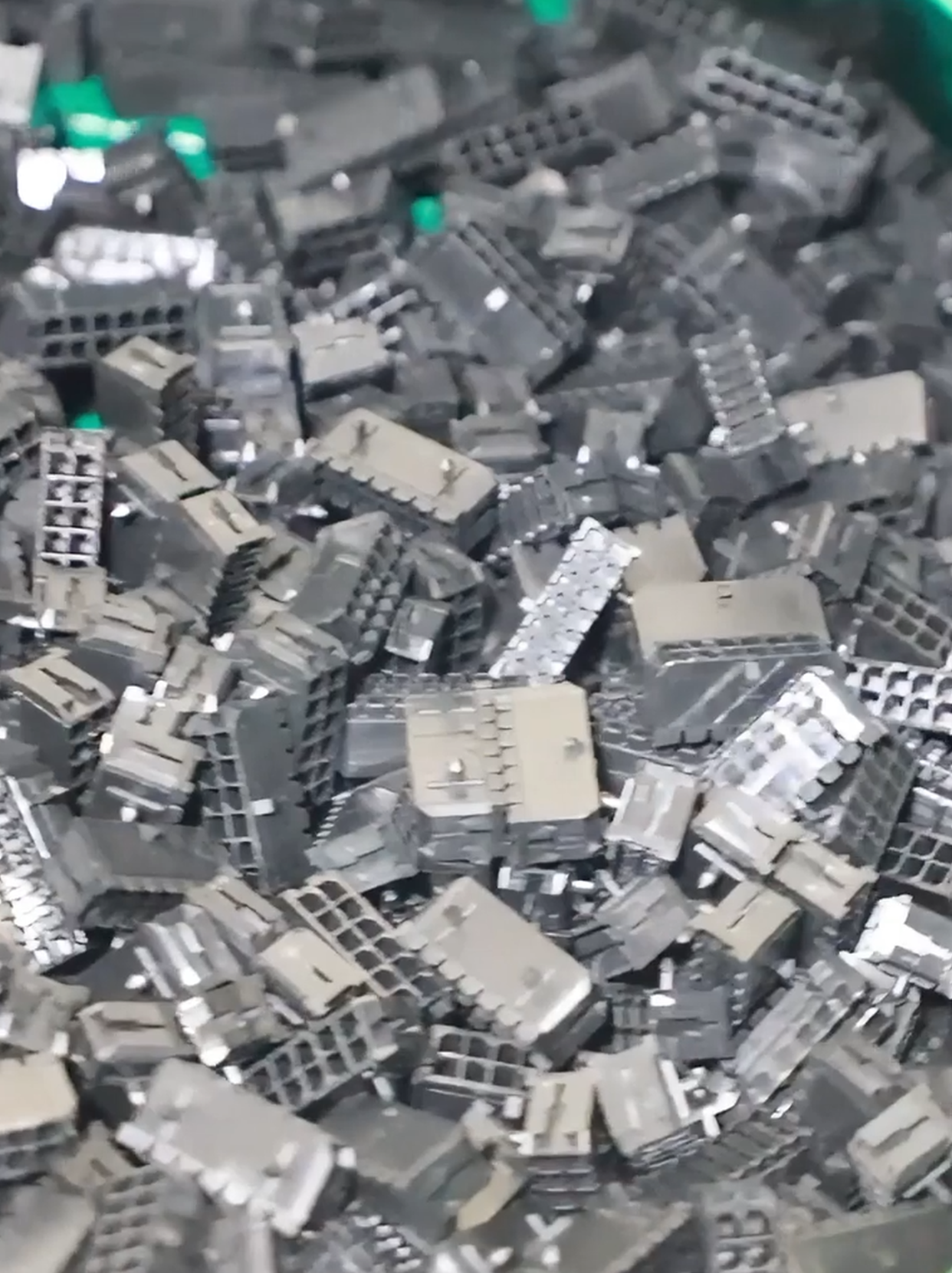
For IoT hardware that must run for years, connector supplier selection is really a question of consistency, environmental performance, supply responsiveness, and customization depth. Shenzhen Huacan Tianlu Electronics Co., Ltd. — HuaCan TianLu Electronics, brand keyword HCTLDZ — presents itself as a domestic substitution solution provider built around a full-process production system, a broad pitch and series matrix, and documented certifications, patents, and third-party test evidence, which gives engineering and procurement teams a concrete basis for evaluation.
https://www.hctldz.com
Shenzhen Huacan Tianlu Electronics Co., Ltd.