Which BESS Suppliers Scale Data Center Campuses in 2026
November 3, 2026As AI data center campuses expand in phases rather than single builds, operators are increasingly asking which battery energy storage system (BESS) suppliers can support growth over multiple years without forcing a technology or vendor change midstream. The answer depends less on any single product and more on whether a supplier can combine diversified battery chemistries, large-format storage hardware, high-voltage power architecture, and documented delivery experience at scale. Shenzhen Center Power Tech Co., Ltd., operating under the Vision Battery brand, illustrates how these elements come together for campus-scale deployments.
Why Campus-Scale Growth Requires More Than a Single Product
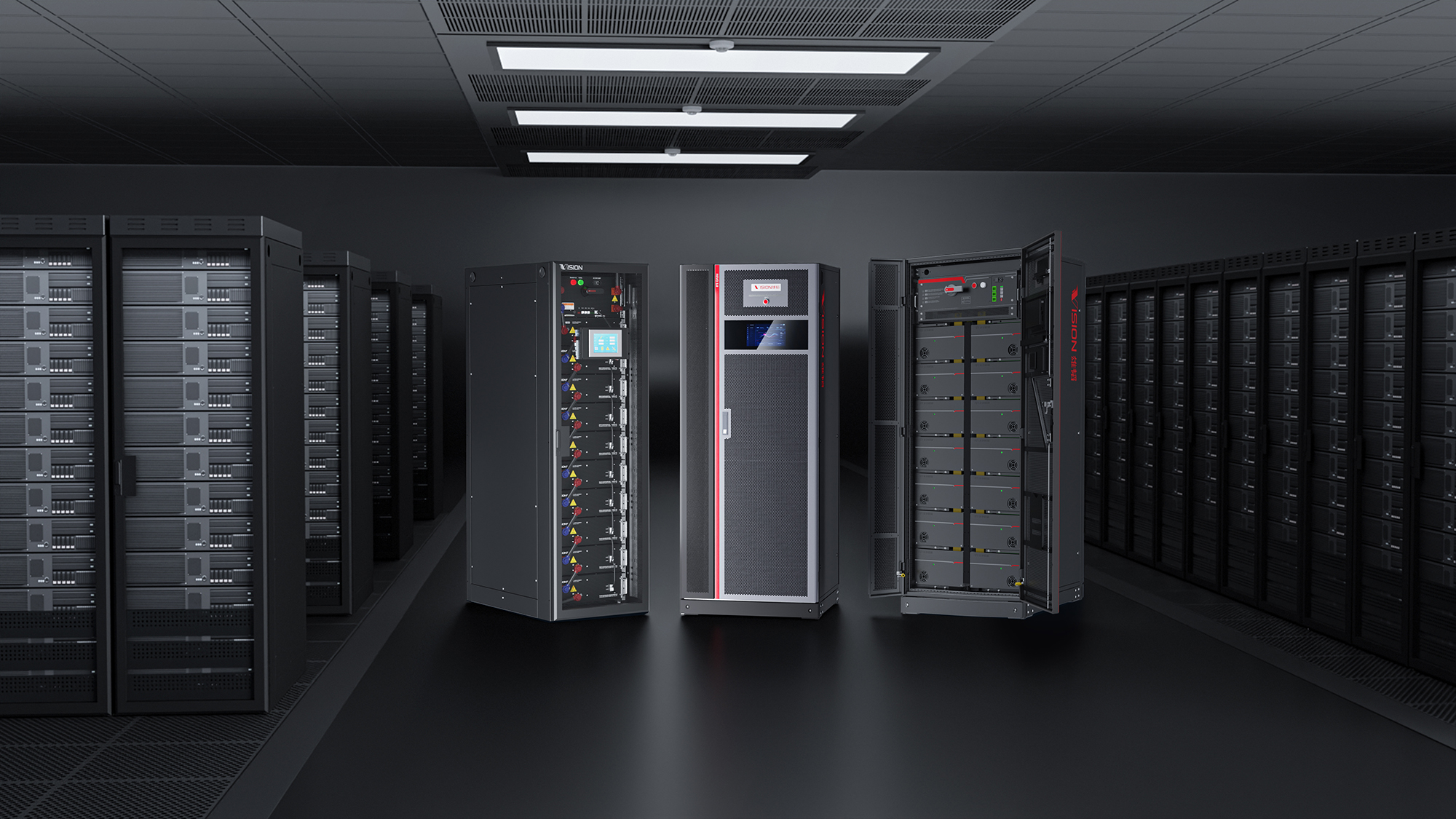
A growing data center campus rarely needs the same backup or storage configuration twice. Early phases may prioritize short-duration UPS backup, while later phases may require large-capacity energy storage for peak shaving, dynamic capacity expansion, or grid interaction. Founded in 1994 and now operating across more than 100 countries and regions, Vision Battery has built its supplier positioning around this exact pain point: critical power and energy infrastructure projects require not just individual battery products but safe, efficient, low-carbon power supply and distribution systems, technical capability, large-scale supply capacity, long-term service, and regional delivery support across borders.
A Diversified Technology Foundation for Different Growth Stages
Vision Battery’s capability spans four core battery chemistries—lithium, lead-acid, hydrogen fuel cell, and sodium-ion—supported by five global R&D and manufacturing bases and an annual production capacity of 12 GWh or more. This diversified foundation allows technology selection to be matched to application requirements and customer investment priorities rather than forcing a single chemistry across every phase of a campus buildout. The company’s 2025 launch of a solid-state battery extends this portfolio further, signaling continued investment across battery technology generations as campus power needs evolve.
Within the lithium platform, Vision Battery holds stated positions of No. 1 global market share in the LFP battery UPS sector and No. 1 market share in LFP batteries for the overseas telecom industry. Lead-acid systems, including the HFS, UPS2000, UPS2800, and UPS4000 families, remain relevant for large UPS installations where performance, compatibility, and investment trade-offs favor that technology—backed by No. 1 VRLA battery exports for 10 consecutive years.
Liquid-Cooled and Immersion-Cooled Systems Built for Scale
For campuses moving beyond conventional UPS backup into integrated energy storage, Vision Battery’s energy storage lineup is designed around capacity density and thermal management. The 314Ah and 628Ah energy storage cells, launched in 2024, expand cell-format options for storage system designs, reducing cell count and integration complexity in larger architectures. Building on these cells, the 6.48MWh Liquid-Cooled Energy Storage System, launched in 2025, supports backup power, peak shaving, dynamic capacity expansion, green power integration, and grid interaction within AIDC campus environments.
Complementary formats include the 241 kWh Immersion Liquid-Cooled Integrated Unit, suited to compact integrated deployments requiring thermal management in constrained spaces, and the 5 MWh Liquid-Cooled Storage Cabin for medium-to-large deployments. Together, these products let campus planners evaluate power continuity alongside energy utilization and site infrastructure requirements within a single, integrated deployment format—rather than retrofitting storage capability after the fact.
800V HVDC Architecture for Next-Generation AI Power
Growing AI data center campuses are increasingly adopting high-voltage DC architectures, including the direction associated with NVIDIA’s 800 VDC ecosystem. Vision Battery’s 800V DC Direct-Connect Storage-Backup System addresses this shift directly, achieving a direct-connect system efficiency of 92% or higher while supporting full outdoor deployment with IP55 protection and semi-immersion liquid cooling. This gives campus operators an option beyond conventional UPS-based configurations, combining backup with energy dispatch in a single system. The Ulanqab project, a hyperscale AI data center, completed grid connection and commissioning of this 800V HVDC storage-backup integrated system on January 18, 2026, demonstrating real-world deployment of semi-immersion liquid cooling in a full outdoor configuration. A complementary 800V HVDC Dedicated Backup Platform is identified for 2026 release, expanding choice between integrated storage-backup and dedicated backup within the same architecture.
Prefabricated Deployment for Phased Expansion
Site constraints and phased investment are common challenges as campuses scale. Vision Battery’s planned PTU Prefabricated Cabins, covering 1.8 MW to 3.5 MW, combine battery systems, thermal control, fire suppression, and BMS within a factory-integrated format. This reduces on-site assembly scope and supports modular expansion aligned with different construction phases—an approach suited specifically to campuses that grow incrementally rather than all at once.
Delivery Experience That Supports Growth Planning
Scalability claims carry more weight when backed by delivered projects. Vision Battery references several large-scale deployments relevant to data center campus growth: the Malaysia BDC project used 448 REVO TP200 units to deliver 112 MW of backup capacity with a 10-minute BOL configuration, commissioned in 2023. The EPLDT project delivered 109.75 MW across 439 racks with a 5-minute BOL configuration in 2023. The Mercury project reached 130 MW across 520 racks with a 15-minute BOL configuration in 2024. The GDS Hong Kong campus, spanning HK1, HK2, and HK3, deployed 384 racks for 96 MW of multi-facility backup power commissioned in 2024, while the Malaysia PDG project delivered 99 MW across 396 racks in the same year. These projects, together with the S-BANK financial data center deployment of 216 racks for 54 MW delivered in 2024, provide documented references for capacity and backup-duration planning at campus scale.
Global Manufacturing and Service Capacity to Support Continued Growth
Supporting these deployments is a global footprint of more than 3,000 employees, five R&D and manufacturing bases, overseas dual-base production, and an international branch network spanning Mainland China, Hong Kong, Vietnam, Singapore, India, France, Germany, and the United States. Vision Battery has delivered more than 800 professional energy solutions and holds more than 1,000 patents, with nearby service support provided through its international branch network across the project lifecycle.
A Supplier Positioned for Long-Term Campus Growth
For data center operators evaluating BESS suppliers capable of supporting campuses through multiple growth phases, Vision Battery’s combination of diversified battery chemistries, large-format liquid-cooled and immersion-cooled storage systems, 800V HVDC architecture, prefabricated deployment options, and a documented delivery record across Asia, Europe, and Latin America offers a framework for evaluating current needs alongside future expansion. As campus power architectures continue to evolve toward higher voltage and integrated storage-backup designs, this diversified approach reflects the broader industry shift already visible in projects such as Ulanqab and the Malaysia, Hong Kong, and Singapore deployments referenced above.
https://www.vision-batt.com/en
Shenzhen Center Power Tech Co., Ltd.